
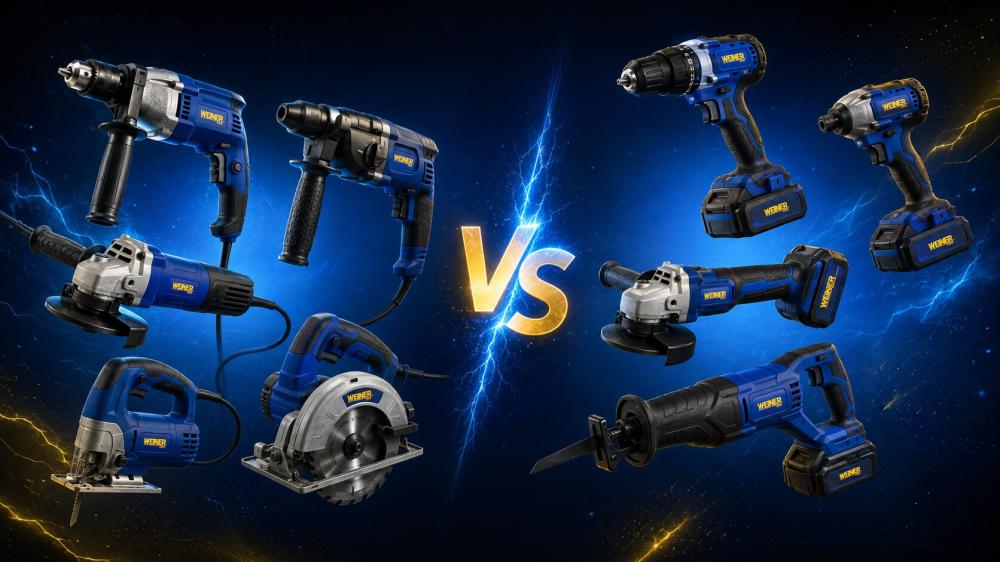
Corded vs. Cordless Power Tools: Which Is Better?
Today, there are many types of power tools available, and one of the most common choices is between corded and cordless tools. When buying a drill, angle grinder, or another power tool, many users wonder whether they should choose a tool that connects directly to electricity or one powered by a rechargeable battery.
There is no single answer for everyone. Each type has advantages that make it suitable for different jobs. The right choice depends on where you work, how long you use the tool, how much mobility you need, and whether a reliable power source is available.
What Is the Difference Between Corded and Cordless Tools?
Corded power tools operate by connecting directly to an electrical outlet. This means they can continue working for long periods without stopping to recharge, as long as a power source is available.
Cordless tools use rechargeable batteries instead of a direct electrical connection. This gives the user greater freedom of movement, especially when working outdoors or in locations without convenient access to electrical outlets.
For example, a corded drill can be practical in a workshop with an available power supply, while a cordless drill can be more convenient when installing shelves or performing maintenance in different areas of a home.
Advantages of Corded Power Tools
1. Suitable for Long Work Sessions
One of the main advantages of corded tools is that they do not depend on battery capacity. They can continue operating as long as electricity is available.
This makes them useful for workshops and maintenance jobs that require extended operation.
2. No Need for Spare Batteries
With a corded tool, there is no need to purchase additional batteries or wait for a battery to recharge. Simply connect the tool to a suitable power source and start working.
3. Practical for Stationary Work
If you normally work in a workshop, garage, or another location with reliable electricity, a corded tool can be a practical choice.
4. No Battery Runtime Concerns
A fully charged battery may not always last through a long project. Corded tools do not have this limitation as long as electrical power remains available.
Disadvantages of Corded Tools
The main disadvantage is the power cord. It can limit movement and may require an extension cord when working far from an electrical outlet.
The cord must also be positioned carefully to prevent it from becoming an obstacle or getting damaged during work.
Advantages of Cordless Power Tools
1. Greater Freedom of Movement
The biggest advantage of cordless tools is the absence of a power cord.
A cordless drill or grinder can be carried easily around a work area, making it particularly useful for farms, outdoor locations, workshops, and construction sites.
2. Ideal for Outdoor Work
When working outdoors, a convenient electrical outlet may not be available. A battery-powered tool solves this problem by allowing you to work without extending a long power cable.
3. Easy to Handle
Without a cord, the tool is easier to move and handle, especially for quick jobs such as installing screws, removing bolts, or drilling a few holes.
4. Easy to Transport
A cordless tool, battery, and charger can often be stored and transported together, especially when the tool comes with a carrying case.
Disadvantages of Cordless Tools
The main limitation is battery runtime. Once the battery runs out, it needs to be recharged or replaced with another battery.
Battery life can also be affected by usage and storage conditions, so it is important to follow the manufacturer's charging and storage recommendations.
For users who work for long periods, having an additional battery can make cordless tools much more practical.
Which Is Better for Home Use?
For home users, the best option depends on the type of work being performed.
For simple tasks such as:
• Installing shelves
• Driving and removing screws
• Drilling a few holes
• Light maintenance
• Furniture assembly
a cordless tool can be extremely convenient because it is easy to carry and use.
For frequent or extended work in a workshop or garage with reliable electricity, a corded tool may be more practical.
Which Is Better for Workshops?
There is no single best option for every workshop.
Corded tools are useful for continuous work, especially when electricity is readily available.
Cordless tools are valuable when the job requires moving between different locations or working outside the workshop.
For many workshops, having both types provides the greatest flexibility.
What About Power and Performance?
A tool should not be judged simply by whether it is corded or cordless. Performance also depends on the motor, operating speed, battery technology in cordless tools, and the type of work being performed.
Modern cordless tools can handle many jobs that previously required corded equipment, while corded tools remain a practical choice for certain applications that require continuous operation.
It is therefore better to look at the actual specifications of the tool rather than choosing based solely on its power source.
How Should You Choose?
Before buying a power tool, ask yourself a few simple questions:
Where will I use it?
If you work in different locations or outdoors, cordless may be more convenient.
How long will I use it?
For extended continuous work, a corded tool may be more suitable.
Is an electrical outlet nearby?
If not, a cordless tool provides greater flexibility.
Will I need to carry the tool frequently?
If so, cordless may be the more practical choice.
Will I work for long periods?
If you choose cordless, consider whether an additional battery is available.
Are Cordless Tools Better for Everyday Users?
For many light household tasks, cordless tools provide a convenient experience because they are easy to handle and move.
However, this does not mean cordless tools are always better. If you need continuous operation in a fixed location, a corded tool may be more appropriate.
The best tool is ultimately the one that matches your actual working conditions and requirements.
Tips for Maintaining Power Tools
Regardless of the type of tool, proper care can help extend its service life:
• Clean the tool after use.
• Do not use the tool beyond its intended capacity.
• Keep tools away from water and excessive moisture.
• Store tools in a clean, dry location.
• Charge and store cordless batteries according to the manufacturer's recommendations.
• Inspect power cords regularly.
• Use suitable accessories for the tool and application.
• If the tool becomes unusually hot, stop and allow it to cool before continuing.
Conclusion
There is no universal answer to the question: Are corded power tools better than cordless tools?
Corded tools are practical for long working sessions, workshops, and locations with a reliable power supply. Cordless tools provide greater mobility and are particularly useful for outdoor work, household maintenance, and jobs that require frequent movement.
Before purchasing, consider where you will use the tool, how long you will operate it, and how much mobility you need. The best choice is the one that provides the right balance of performance, convenience, and cost for your actual work.