
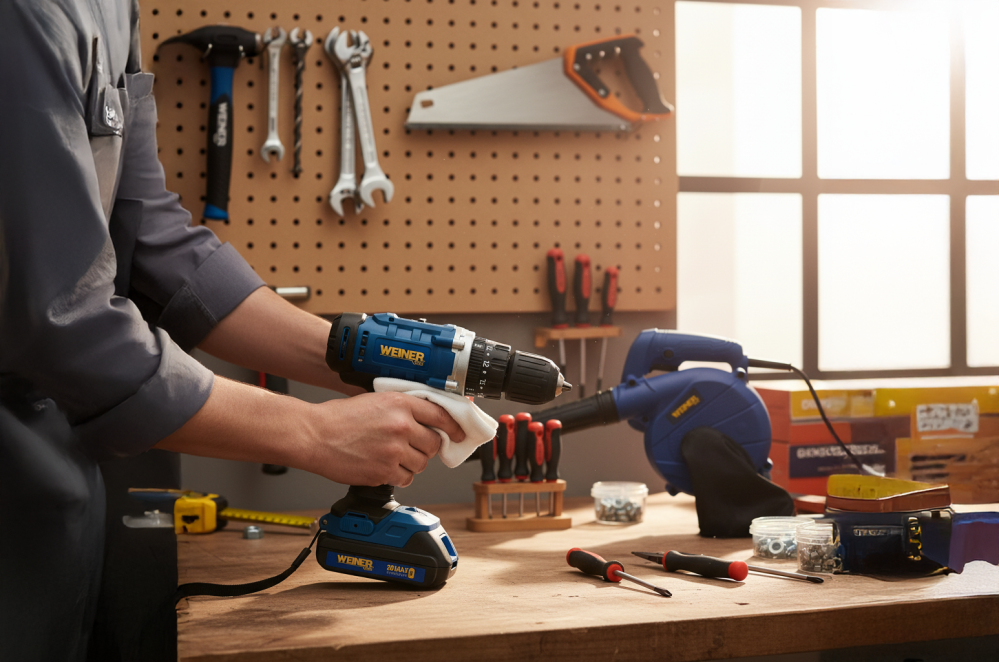
Electrical Equipment Maintenance Guide: Simple Steps to Extend the Life of Your Tools at Home or in the Workshop 🧰
Electrical tools such as electric drills, saws, and screwdrivers are essential—whether you work in an industrial workshop or just use them at home for simple repairs.
Taking care of these tools doesn’t require an expert — with a few simple steps, you can maintain their strong performance and extend their lifespan.
🔹 1. Clean After Every Use
Dust and debris from wood or metal are among the main causes of tool damage.
In workshops or factories, it’s best to use an air compressor to blow dust out of vents and corners, as the strong air pressure cleans tools deeply.
For home or personal use, a small air blower or even a soft brush is enough to reach tight spots.
Avoid washing tools directly with water to prevent electrical damage.
💡 Tip: Regular cleaning helps keep your tools efficient and reduces the chance of breakdowns, whether at home or in the workshop.
🔹 2. Check Cables and Plugs
Before using any tool like an electric drill or saw:
- Make sure cables are intact with no cuts or cracks.
- Don’t pull the cord from the outlet; unplug it by hand.
- Use high-quality extension cords suitable for the tool’s power rating.
This simple step prevents many accidents and extends your tool’s life.
🔹 3. Lubricate Moving Parts Regularly
For tools with mechanical parts such as drills and electric saws, periodic lubrication is important.
- Use light machine oil.
- Wipe off any old oil before adding new.
- Don’t over-lubricate—too much oil can reach electrical components.
Regular lubrication reduces friction and prevents the motor from overheating.
🔹 4. Store Tools Properly
After finishing your work:
- Store tools in a dry place, away from moisture and water.
- Keep them out of direct sunlight or heat.
- Use a toolbox or carrying case to protect them from impacts.
Even at home, having a dedicated storage area keeps tools organized and prevents damage.
🔹 5. Use Tools Smartly — Avoid Overloading
Running tools continuously without breaks can cause overheating and shorten their lifespan.
- Give the tool short rests during long sessions.
- Don’t apply excessive pressure while working.
- If you hear unusual noises or smell burning, stop immediately.
🔹 6. Perform Regular Preventive Maintenance
Whether at home or in a workshop, periodic maintenance is key.
- Check the carbon brushes in your drill or saw every few months.
- If you use an air compressor, ensure proper air pressure and oil level (if applicable).
- Tighten screws and bolts on frequently used tools.
⚙️ Conclusion
Maintaining your electrical tools doesn’t take much effort — just a bit of cleaning, routine inspection, and proper storage.
With these simple steps, you can ensure strong performance and long-lasting tools—like your electric drill, electric saw, air compressor, and hand screwdrivers—whether you use them at home or in your workshop.