
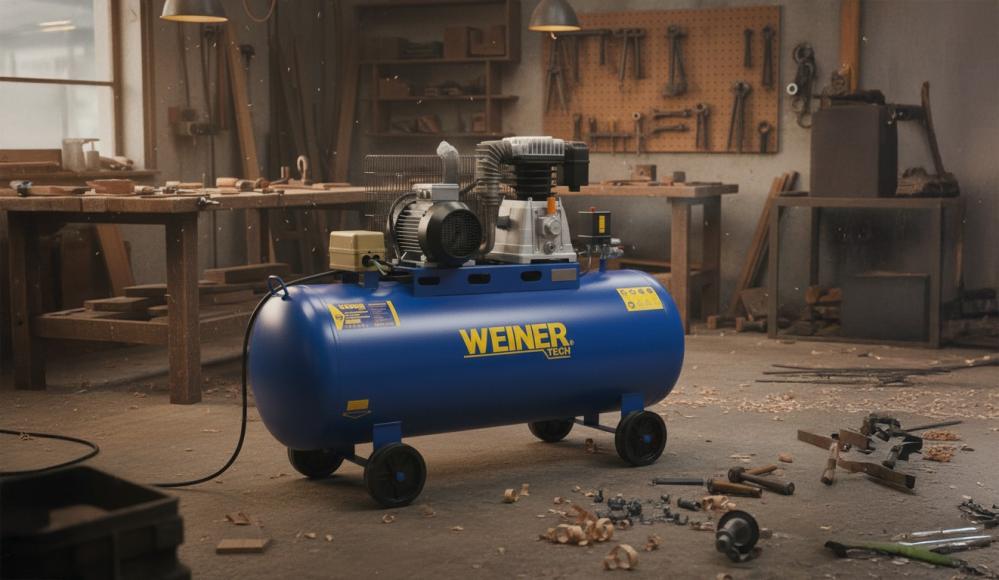
Belt Drive Air Compressors – Power and Reliability for Workshops and Industry
Belt drive air compressors are among the most popular types of compressors used in industrial and workshop environments, thanks to their high durability, stable air pressure, and ability to run continuously for long periods.
This type of compressor operates using a rubber belt that connects the motor to the pump head, which reduces direct stress on the motor and helps extend its lifespan.
How It Works and Key Differences
The belt-driven system works in a simple yet efficient way:
the motor rotates the belt, which transfers motion to the compression cylinder. Air is drawn in and then compressed into the tank.
This mechanism runs cooler and quieter than direct-drive compressors, where the motor is directly connected to the pump.
As a result, belt drive compressors experience less vibration and noise, providing smoother operation during long tasks.
Compared to silent air compressors, belt drive models aren’t completely quiet, but they strike an excellent balance between power and noise reduction, making them ideal for workshops, car repair centers, paint jobs, and woodworking tasks.
Advantages of Belt Drive Air Compressors
Here are the main benefits of this type of compressor:
- Strong, consistent performance even during extended use.
- Better cooling since the motor and pump are separated.
- Lower noise and vibration compared to direct systems.
- Longer lifespan due to reduced mechanical stress.
- Easy maintenance, with simple belt replacement when needed.
These features make belt drive compressors the preferred choice for workshops that rely on compressed air tools such as nailers, impact wrenches, paint sprayers, and cleaning systems.
Real-World Applications
Belt drive compressors aren’t limited to factories; they’re widely used in:
- Auto and paint workshops
- Carpentry and metalworking shops
- Cleaning and maintenance stations
- Industrial plants and production lines
- Pneumatic and air-powered tools
They’re a reliable power source for tools that require steady, powerful air output.
Available Capacities and Power Options
Belt drive compressors come in various tank sizes and power levels to fit every need — from light to heavy-duty applications.
They typically start at 50 liters – 2 HP for small tasks and go up to 300 liters – 3 HP or higher for industrial use.
Among the trusted brands available is Weiner (وينر tech), offering a range of belt-driven air compressors with high quality and reliable performance, including:
- 50 liters – 2 HP
- 90 liters – 2 HP
- 150 liters – 2.5 HP
- 200 liters – 2.5 HP
- 300 liters – 3 HP (available in 220V & 380V)
Weiner compressors feature durable tanks, steady airflow, and powerful motors, making them perfect for workshop and industrial use.
Tips for Choosing the Right Compressor
- Assess your workload – pick the right tank capacity and horsepower for your daily tasks.
- Check voltage compatibility – 220V or 380V.
- Maintain regularly – change the oil and clean filters periodically.
- Use safety accessories – pressure regulators and filters help protect your tools.
- Ensure good ventilation – place the compressor in a cool, ventilated area.
Conclusion
Belt drive air compressors offer the perfect blend of power, efficiency, and durability.
They’re built for long-term use with stable performance and moderate noise levels — ideal for professionals who rely on compressed air daily.
With multiple sizes and models available from Weiner Tech, users can easily find the compressor that best suits their workshop or industrial needs.
🔗 Start your project with high power and continuous performance - with Weiner Tech.