
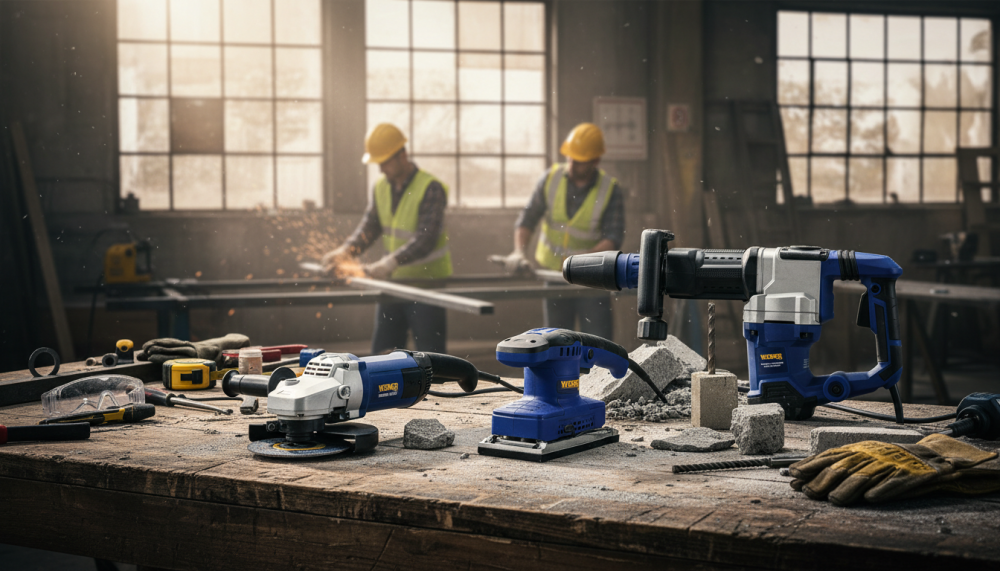
The Complete Guide to Power Tools
A Simple Guide for Homeowners and Small Workshops
Power tools are no longer limited to large workshops or professional technicians. Today, they have become an essential part of almost every home. Whether you want to hang a picture, fix a door, cut wood, or complete a small DIY project, having the right power tool saves time, effort, and delivers better and safer results.
Many users make the mistake of buying tools based only on price or appearance, without understanding their real purpose or whether they are suitable for the job. This guide is written as a simple reference to help you understand essential power tools, their uses, and how to choose the right one without confusion or technical complexity.
What Are Power Tools and Why Do You Need Them?
Power tools are devices that operate using electricity or batteries to make drilling, cutting, grinding, sanding, and demolition tasks easier compared to manual effort. Their main purpose is to:
• Complete tasks faster
• Reduce physical effort
• Deliver more accurate and stable results
• Minimize mistakes and safety risks in many applications
Owning the right power tool does not mean you are a professional—it means you work smarter.
Common Types of Power Tools and Their Uses
Electric Drill
The drill is the most commonly used power tool in homes. It is used for drilling into walls, wood, metal, and sometimes for driving screws.
Common household uses include:
• Hanging curtains
• Installing shelves
• Mounting accessories
• Basic home maintenance tasks
Many users choose a weak drill for concrete or a heavy-duty drill for light tasks, which leads to fatigue or poor performance.
Angle Grinder
The angle grinder is a versatile tool used for cutting, grinding, and surface finishing depending on the disc used.
It is commonly used for:
• Cutting metal
• Cutting tiles
• Cleaning welds
• Edge finishing
This is one tool where safety and build quality should never be ignored.
Demolition Hammer
A demolition hammer is designed for heavy-duty tasks such as:
• Breaking walls
• Removing tiles
• Creating channels for wiring or plumbing
It is not necessary for every home. Many users buy one without real need, or choose a weak model that delivers poor results.
Other Common Power Tools
• Electric saws for wood cutting
• Sanders for surface finishing
• Paint mixers for mixing paints and compounds
• Air compressors for pneumatic tools or inflation
Each tool serves a specific purpose, and buying should be based on real needs.
How to Choose the Right Power Tool
1. Clearly Define Your Work
Before purchasing, ask yourself:
• Is my usage light or frequent?
• Will I work indoors or outdoors?
• Am I working with wood, metal, or concrete?
Answering these questions solves most of the decision process.
2. Don’t Be Misled by Numbers Alone
Wattage or voltage does not always reflect real performance. Sometimes a lower-rated tool performs better due to:
• Motor quality
• Power transfer efficiency
• Gear system design
• Internal cooling and ventilation
3. Comfort and Safety Matter
A good tool should:
• Be well balanced
• Have a comfortable grip
• Produce less vibration
• Offer better control
These factors are especially important during extended use.
4. Availability of Accessories and Spare Parts
A tool without available bits, discs, or replacement parts quickly becomes a problem.
Common Mistakes When Buying Power Tools
• Buying very cheap tools for heavy tasks
• Using tools outside their intended purpose
• Ignoring safety equipment
• Storing tools in hot or humid environments
• Applying excessive pressure instead of letting the tool work naturally
These mistakes shorten tool life and increase failure risk.
Important Safety Tips
• Always wear protective eyewear
• Do not operate overheated tools
• Disconnect power before changing accessories
• Read the user manual at least once
• Never use damaged or unstable tools
Maintenance and Extending Tool Life
Good tools require simple care:
• Clean after each use
• Prevent dust buildup
• Store in a dry place
• Avoid overloading the tool
These habits can extend tool lifespan for many years.
Conclusion
Power tools are not luxury items; they are practical solutions that help you work more efficiently and safely. Choosing the right tool is not about price or appearance, but about understanding its real purpose.
When you select the right tool, you will notice a clear difference in:
• Results
• Time
• Effort
• Safety
This guide is a solid starting point for anyone who wants to use power tools with confidence and awareness.