
How to Choose the Right Drill for Your Home? (A Simple Guide)
Choosing the right drill for home use may seem simple, but it’s actually an important decision that can save you time, effort, and money in the long run. Many people buy a drill randomly, then later realize it’s too weak, too heavy, or not suitable for the tasks they need.
In this simple guide, we’ll explain everything you need to know to choose the right drill, using clear language and real-life examples.
What Is a Drill and Why Do You Need One at Home?
A drill is a power tool used for drilling holes in walls, wood, metal, and sometimes concrete, as well as for tightening and loosening screws.
At home, a drill is useful for many everyday tasks, such as:
- Hanging curtains
- Installing shelves
- Mounting pictures and frames
- Installing lighting fixtures
- Assembling or disassembling furniture
- Performing basic maintenance work
Having the right drill at home means you won’t need to call a technician for every small task, saving both time and money.
First: Define Your Usage Before Buying
Before looking at prices or brands, ask yourself one simple question:
What will I use the drill for?
1. Light Home Use
Examples:
- Hanging a picture frame
- Installing a curtain rod
- Tightening simple screws
In this case, you don’t need a very powerful drill. A lightweight and easy-to-use model is more than enough.
2. Medium Home Use
Examples:
- Installing kitchen cabinets
- Basic woodworking projects
- Frequent drilling into walls
Here, you’ll need a stronger drill with better speed control.
3. Heavy or Semi-Professional Use
Examples:
- Drilling into concrete
- Home renovation projects
- Frequent and demanding use
In this case, a hammer drill or rotary hammer is the right choice.
Second: Types of Drills Explained
1. Standard Drill (Without Hammer Function)
Suitable for wood, metal, and screw driving.
Not suitable for concrete walls.
Real-life example:
Assembling furniture or fixing wooden doors.
2. Hammer Drill
Includes a hammer function that helps drill into hard walls.
Real-life example:
Mounting a TV or air conditioner on a concrete wall.
3. Rotary Hammer (Heavy-Duty)
More powerful than a hammer drill, designed for concrete and heavy work.
Real-life example:
Light demolition work or electrical installations inside walls.
Third: Corded Drill or Cordless Drill?
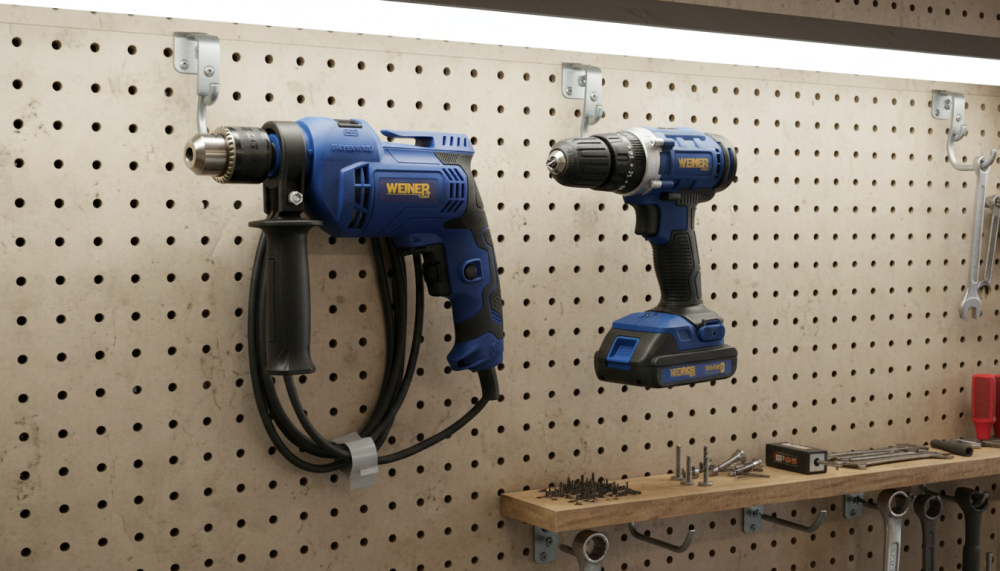
🔌 Corded Drill
Advantages:
- Constant power supply
- Lower price
- Suitable for long working hours
Disadvantages:
- Limited mobility
- Needs a power outlet
Best for:
Workshops or indoor work near electrical outlets.
🔋 Cordless Drill
Advantages:
- Freedom of movement
- Easy and comfortable to use
- Ideal for quick tasks
Disadvantages:
- Depends on battery charge
- Slightly higher price
Best for:
Daily home use and tight spaces.
Fourth: Key Specifications to Look For
1. Voltage (For Cordless Drills)
- 12V: Light tasks
- 18–20V: Strong home use
- 21V and above: Professional-level use
2. Torque
Higher torque means better performance when driving large screws or drilling into hard materials.
3. Speed Settings
Multiple speeds or variable speed control provide better accuracy:
- Low speed for screws
- High speed for drilling
4. Weight and Ergonomics
A lighter drill reduces fatigue, especially during long use or overhead work.
Fifth: Real-Life Examples of Choosing the Right Drill
- Apartment resident who only hangs pictures and curtains → A 18–20V cordless drill is ideal.
- Homeowner installing cabinets and working with wood and metal → A medium-power hammer drill.
- Someone renovating an apartment → A high-power rotary hammer.
Sixth: Where Do WEINER Tech Products Fit In?
The market offers many options, including WEINER Tech, which provides practical solutions for different needs:
- 20V Brushless Cordless Drill
- A solid choice for home and medium-duty use, offering good power and longer motor life.
- 21V Cordless Rotary Hammer – 26mm
- A practical option for concrete drilling with the freedom of cordless operation.
These tools are suitable for users looking for reliable performance without unnecessary complexity.
Seventh: Common Mistakes When Buying a Drill
- Buying an overly powerful drill without real need
- Focusing only on voltage and ignoring torque
- Ignoring handle comfort and balance
- Overlooking included accessories
Conclusion
Choosing the right drill for your home doesn’t require expert knowledge—just a clear understanding of your actual needs.
Define your usage, select the right type (standard, hammer, or rotary hammer), and balance power with comfort.
A good drill should:
- Match your daily needs
- Be easy to use
- Offer safety and comfort
- Last for years
With the wide range of options available today, including WEINER Tech tools, finding the right drill for any