
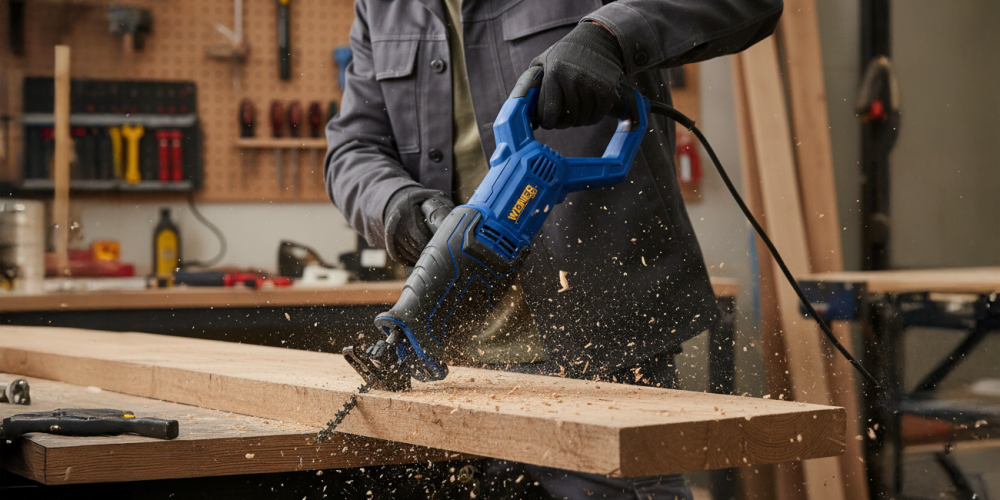
The Reciprocating Saw: A Versatile Cutting Tool for Every Workshop and Home
The reciprocating saw is one of the most important modern cutting tools thanks to its ability to perform a wide range of tasks quickly and easily. It combines power and flexibility and is used in construction, maintenance, carpentry, plumbing, and even rescue operations. This type of saw operates using a high-speed back-and-forth blade movement, allowing it to cut different materials without complex techniques or the need for advanced experience.
A reciprocating saw gives users far more freedom compared to traditional saws. It is suitable for cutting in tight spaces, separating pipes, removing damaged wood, and even cutting metal quickly and safely.
What Is a Reciprocating Saw and How Does It Work?
A reciprocating saw is an electric tool that relies on rapidly moving the blade back and forth to perform cutting operations. The blade typically moves with a stroke range of 20–30 mm, providing enough force to penetrate various materials.
This saw is an ideal choice for tasks that require removing or cutting large sections quickly, without the need for extreme precision—such as demolition and renovation work.
Common Uses of a Reciprocating Saw
A reciprocating saw is capable of performing many tasks, including:
1. Cutting Wood
It is used for cutting thick wood, raw lumber, branches, and panels, especially in places that are difficult to reach with circular or hand saws.
2. Cutting Metal
With a metal-specific blade, it can easily cut iron pipes, steel rods, angle bars, and metal sheets.
3. Plumbing Work
An excellent choice for cutting PVC and copper pipes inside walls or ceilings, providing fast cutting with minimal space.
4. Demolition and Removal
Used for dismantling old wood, removing light walls, and taking out stuck components—making it essential for renovation projects.
5. Rescue Operations
Some rescue teams use it for its ability to quickly cut wood and metal when reaching tight or blocked areas.
Features of a Reciprocating Saw
1. High Flexibility
It can be used in corners, elevated areas, and tight spaces thanks to its slim, elongated design.
2. Easy Blade Changes
Most modern reciprocating saws include a quick blade-change system without tools, improving productivity.
3. High Cutting Power
Power ratings usually range between 500–1500W, providing strong performance for cutting thick wood and metal.
4. Adjustable Speed
Variable-speed control allows better precision—starting slow and increasing speed depending on the material.
5. Better Safety
It is generally safer than circular saws, especially during rough or demolition cuts.
How to Choose the Right Reciprocating Saw
When buying a reciprocating saw, pay attention to:
- Power (Watt) – Higher wattage means easier cutting of tough materials.
- Stroke Length – Longer stroke = faster cutting, but more vibration.
- Speed Range (SPM) – Variable speed provides better control.
- Handle and Balance – A comfortable grip reduces fatigue.
- Blade Compatibility – Ensure availability of blades for wood, metal, and plastic.
- Weight – Lighter saws offer better control in tight areas.
Reciprocating Saws in Workshops and Homes
Whether you're a workshop owner, maintenance technician, plumber, or even a home DIY user, a reciprocating saw offers great value:
- Reduces working time
- Perfect for emergency tasks
- Cuts in areas where circular saws cannot reach
- Provides strong results without requiring advanced skill
Conclusion
A reciprocating saw is an essential cutting tool for anyone working in renovations, plumbing, carpentry, or home projects. With its power and easy handling, it delivers excellent performance on various materials, making it one of the most versatile tools available today.