
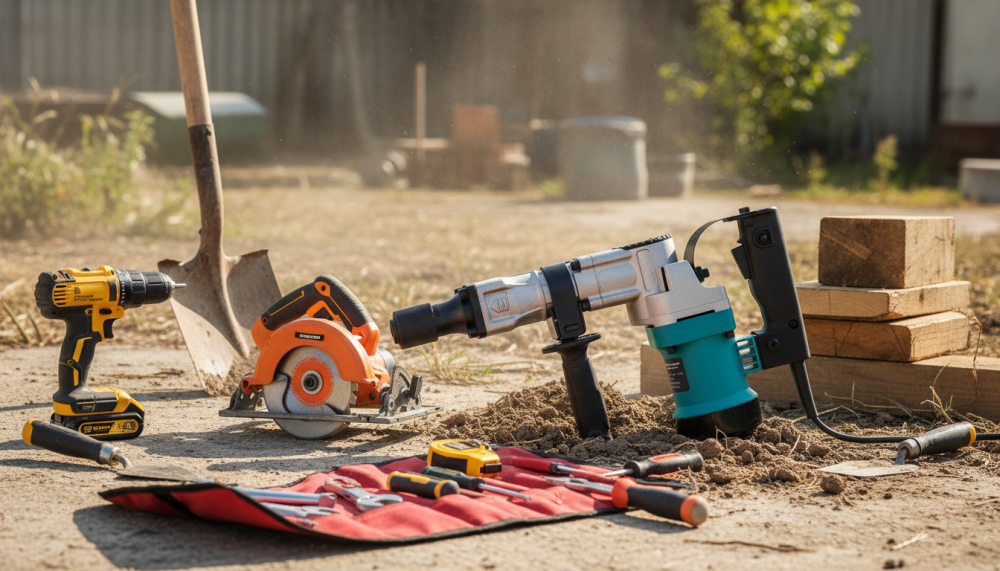
Tools Suitable for Outdoor Use
Working in outdoor environments is completely different from working inside a home or a closed workshop. High temperatures, dust, humidity, and sometimes direct exposure to sunlight all have a significant impact on tools. Many users buy a good tool, but after some time they notice weaker performance or breakdowns. In most cases, the problem is not poor quality, but that the tool was simply not designed for outdoor use.
In this article, we explain the most important types of tools suitable for outdoor work and how to choose them correctly, whether you use them at home, on a farm, at a rest area, or for light outdoor maintenance tasks.
Challenges of Working Outdoors
Before choosing any tool, it is important to understand the challenges of open environments. High temperatures can cause motors to overheat, dust can enter internal components, and humidity may lead to rust or electrical issues. Outdoor tools need higher durability and a different design compared to tools intended only for light indoor use.
A simple example: a drill may work perfectly inside a closed room, but lose power or stop when used outdoors under direct sunlight due to weak ventilation or insulation.
Power Tools Suitable for Outdoor Use
Power tools used outdoors must have certain essential features, with durability being more important than just the power rating printed on the box.
What Makes a Power Tool Suitable for Outdoor Use?
• A motor that can withstand high temperatures
• Good ventilation for effective cooling
• A strong housing that resists dust
• Stable performance during repeated use
Common outdoor power tools include:
• Drills for drilling into exterior walls or fences
• Angle grinders for cutting metal or tiles outdoors
• Water pumps for agricultural work or cleaning
Real-life example: using a low-quality angle grinder to cut metal outdoors often leads to quick overheating and sudden shutdowns, while a tool designed for outdoor use completes the job without issues.
Durable Hand Tools for Outdoor Work
Hand tools are widely used outdoors and are exposed to harsh conditions such as moisture and dust. That’s why they should be made from strong, reliable materials.
Key Features of Outdoor Hand Tools:
• Rust-resistant metal
• Comfortable, non-slip handles even with sweaty hands
• Ability to handle pressure and repeated impact
Examples include:
• Hammers for maintenance tasks
• Pliers for electrical or agricultural work
• Screwdrivers for general use
A poor-quality hand tool may slip or break and cause injury, while a good one offers better safety and control.
Cleaning and Cutting Tools for Open Areas
In farms and rest areas, cleaning and cutting tools are just as important as maintenance tools.
Common Tools:
• Outdoor cleaning tools
• Pruning shears for trees and plants
• Light manual or electric saws
These tools should be:
• Easy to carry
• Resistant to dust
• Simple to maintain
Example: a low-quality pruning shear gets stuck on the first thick branch, while a good one saves time and effort.
Emergency and Quick-Use Tools
Having emergency tools in outdoor locations is very important, especially on farms or in remote areas.
Useful tools include:
• Portable work lights
• Basic first aid tools
• Multi-purpose tools
These tools may not be used daily, but when needed, they make a big difference.
Ease of Carrying and Storage
Outdoor tools should be easy to transport and store, as they are often moved from one place to another.
Important tips:
• Choose tools with a suitable weight
• Use sealed and sturdy storage boxes
• Avoid leaving tools exposed to sun or rain
Proper storage extends the life of tools even when used in harsh environments.
Simple Safety and Maintenance Tips
To extend the lifespan of outdoor tools:
• Clean the tool after each use
• Do not leave it under direct sunlight for long periods
• Regularly check cables and moving parts
• Use the tool within its intended capacity
These simple steps reduce breakdowns and save repair or replacement costs.
Conclusion
Choosing tools suitable for outdoor use is not a luxury, but a necessity. The right tool withstands harsh conditions, delivers better results, and saves you effort and risk. Don’t focus only on price or appearance—think about the working environment and the nature of the job.
A tool that can handle heat and dust today will serve you reliably for a much longer time tomorrow.